The short answer
Indian students who have completed secondary school can apply to eligible university Korean-language institutes. These are non-degree courses, commonly organised into intensive terms. For a qualifying long-term language programme, the relevant status is generally D-4, not the D-2 degree visa. Course completion can strengthen a later university application but does not secure admission, a scholarship or a visa by itself.
What is a university Korean language course?
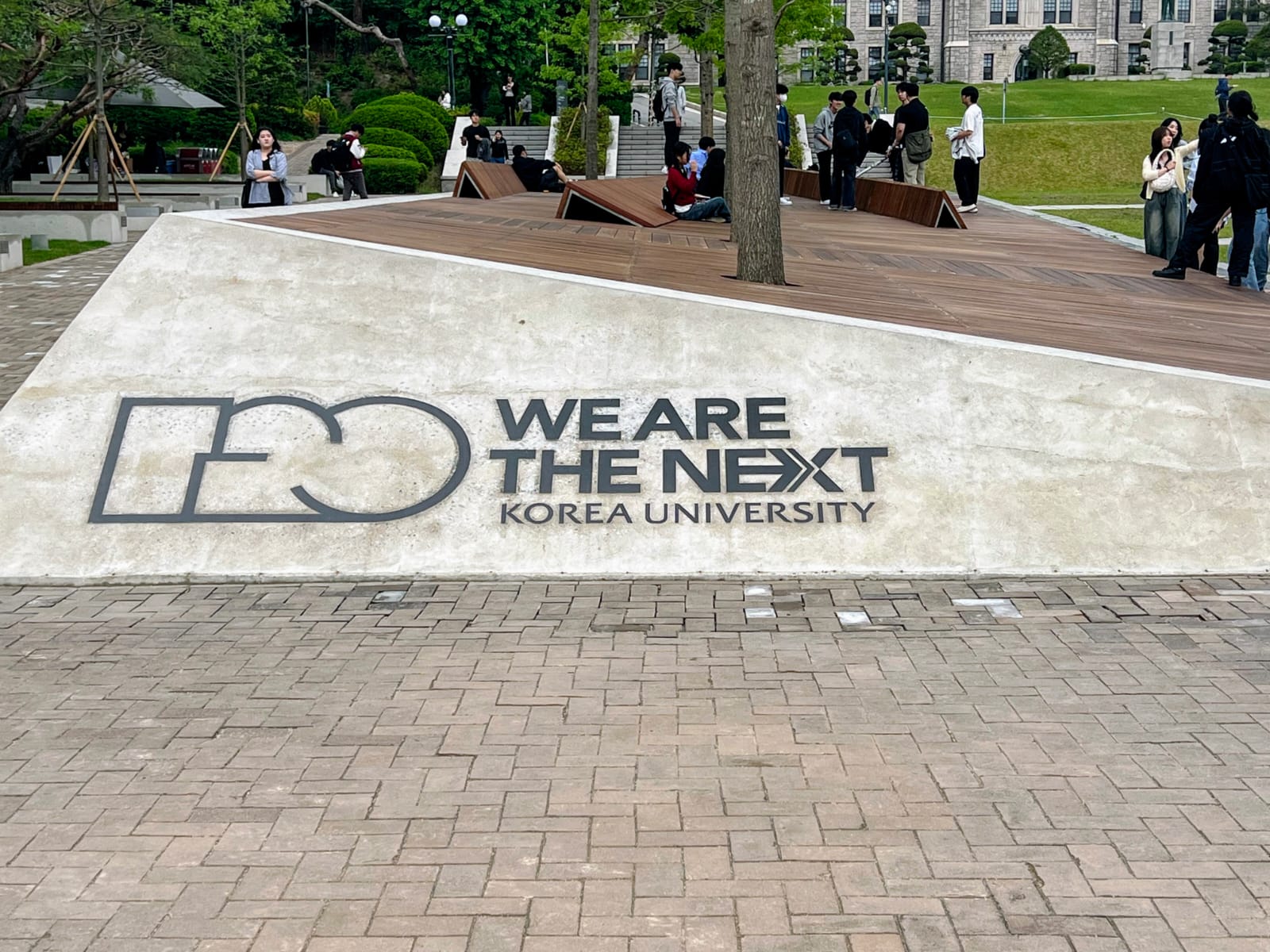
University-affiliated institutes teach practical Korean through a structured sequence of levels. They are not undergraduate or master's programmes. Yonsei Korean Language Institute's regular programme is ten weeks per term, with 200 teaching hours, six levels and four terms each year. Korea University's Korean Language Center also schedules spring, summer, autumn and winter terms. The pace suits students preparing for Korean-medium study, but a shorter or online course may serve a different purpose.
Compare the teaching schedule, location, accommodation help, level-placement process and whether the exact course supports the visa you require. An online course does not become an in-person visa route simply because it bears a university's name. If you are already choosing a degree taught in English, first read our English-medium study guide; you may not need a separate language year.
What will Korean language study cost in 2027?
Budget from a named institute's fee schedule, not a blanket “cost of studying in Korea” quote. Yonsei's published 2027 regular-course fees are KRW 1,960,000 tuition per ten-week term and a KRW 130,000 non-refundable application fee. Four Yonsei terms would therefore be KRW 7,840,000 in tuition alone at that stated rate, before any future fee changes. This is an example, not a national average or a quote for Korea University.
| Budget item | What to confirm |
|---|---|
| Course tuition | Published fee per term, advance-payment terms and refund policy |
| Application | Non-refundable processing fee and payment method |
| Living | Accommodation deposit, food, transport and insurance |
| Travel and documents | Flights, visa application, courier, translations and financial evidence |
Exchange rates change daily, so convert your institute's current KRW invoice to INR when planning payment rather than treating a fixed INR figure as a 2027 price. See our living-cost breakdown for separate city-level budgeting; it is not part of the tuition quote.
When can you start? A real 2027 calendar
Unlike many degrees, intensive language centres often run four intakes. Korea University's published 2027 regular-programme calendar lists the following; confirm the current notice before sending originals or paying.
| Term | Applications | Course dates |
|---|---|---|
| Spring | 7 Dec 2026 – 22 Jan 2027 | 18 Mar – 31 May 2027 |
| Summer | 8 Mar – 23 Apr 2027 | 16 Jun – 26 Aug 2027 |
| Autumn | 7 Jun – 23 Jul 2027 | 10 Sep – 26 Nov 2027 |
| Winter | 6 Sep – 22 Oct 2027 | 14 Dec 2027 – 28 Feb 2028 |
Korea University warns that places can close early. Its D-4 applicants must have original documents arrive at least two weeks before the application deadline. Other institutes have different calendars; do not transfer these dates to Yonsei, SNU or another centre.
D-4 for language study versus D-2 for a degree
The Korean government's student-visa guidance distinguishes D-4 non-degree training from D-2 degree study. A regular university language course may support a D-4-1 application; confirm eligibility with the institute and the Korean visa authority responsible for your application in India. Receive the institute's admission documents before preparing the visa submission.
Korea University's application procedure says the standard admission letter for D-4-1 can be issued approximately one month before the term begins, after registration is complete. It requests online application, fee payment and original documents, with screening typically taking one to two weeks from document arrival. It also specifies translation and document-freshness rules. Requirements, financial proof and processing times can differ by institution and consular jurisdiction: obtain the current checklist directly rather than assuming a universal bank-balance figure.
A visa allows you to request entry, not guaranteed entry or admission to a degree. If you later secure a degree offer, check the requirements for the appropriate D-2 status before the degree begins. Our student-visa guide explains the broader document sequence.
Can a language course lead to a Korean university degree?
Yes, as a preparation pathway, not automatic progression. Intensive study can help you build the reading, writing and speaking skills needed for Korean-medium classes and for TOPIK preparation. Your target degree department still decides its academic eligibility, Korean or English test requirements, deadline and scholarship criteria independently. Even completing all six institute levels should not be presented as a universal substitute for the department's required TOPIK score.
Work backwards from the degree you want: check its admission language first, then decide how many language terms you may need. If your preferred programme is English-taught, ask whether Korean proficiency is required for admission or simply helpful for daily life and placements. Compare our university profiles and TOPIK 2027 guide before committing to a year of language tuition.
How should an Indian student apply?
- Choose the outcome. Decide whether you want Korean for everyday life, TOPIK, or entry to a named Korean-medium degree.
- Compare named institutes. Check the current course format, total teaching hours, actual tuition, housing and visa-support terms.
- Check eligibility. Yonsei and Korea University list completed secondary schooling for their regular programmes; ask about your particular certificate and any additional nationality-specific documents.
- Prepare originals early. Follow your institute's rules for graduation documents, financial evidence, translations, courier delivery and application fees.
- Apply to the institute. Submit the correct term's application and wait for its admission and payment instructions; keep receipts and copies.
- Arrange the correct visa. Use the issued admission documents and the current D-4 checklist applicable to your place of application; do not book non-refundable travel on the assumption of approval.
Frequently asked questions
Can an Indian student join a Korean language course after Class 12?
Yes, subject to the institute's requirements. Yonsei and Korea University's regular language programmes accept applicants who have completed secondary school or equivalent. Yonsei requires the final graduation certificate by its application deadline; a student awaiting results should check eligibility before applying.
Do I need IELTS to study Korean at a university language centre?
The published regular-language-course eligibility pages cited here focus on educational qualifications and application documents, not a universal IELTS score. Ask the specific institute about its current language-entry rules. A later English-taught degree may have separate English proficiency requirements.
Is a D-4 visa the same as a degree student visa?
No. Korea's government identifies D-4 for non-degree training and D-2 for degree study. An offer for a language course does not automatically give admission to a university degree or convert a D-4 stay into D-2 status.
Will a language course guarantee admission or a scholarship?
No. A language course can build Korean proficiency and help you prepare for TOPIK, but degree admission and scholarship decisions follow separate, programme-specific rules.
Official sources
Reviewed 3 October 2026. Dates, tuition and visa rules can change. Always check the institute's live notice and the current Korean visa instructions before applying.