
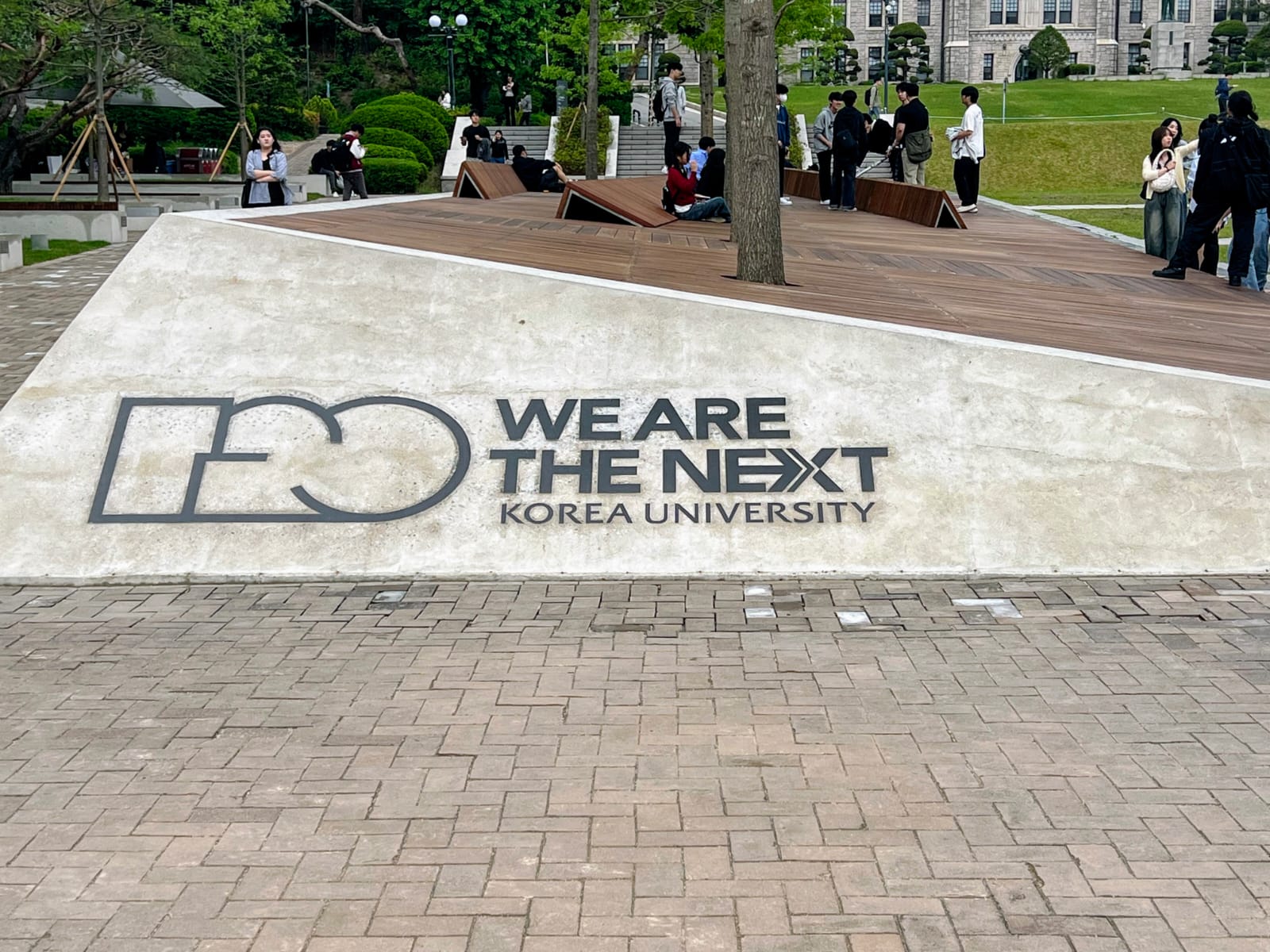
Campus photograph: Korea University. This photograph does not represent every business school discussed below.
The short answer
Indian graduates can pursue an MBA in South Korea, including English-taught options. Choose by curriculum, degree eligibility, professional experience and total cost, not simply the university's name. Admission, funding and employment are separate decisions.
Is an MBA in South Korea right for you?
An MBA is a professional management qualification. It can suit Indian graduates seeking broader skills in strategy, finance, marketing, operations or entrepreneurship, particularly when their career interests connect with Korean or wider Asian businesses. Look for courses and practical projects that address the work you want to do after graduation.
Distinguish an MBA from a research master's in business administration. Similar English degree titles can conceal different curricula, thesis requirements and intended audiences. A programme geared towards working executives may not suit a recent graduate seeking full-time campus study.
If research is your main goal, compare the MBA with our master's study guide and PhD and integrated master's–PhD guide. Choose the degree that fits your intended pathway.
Korean MBA programmes: an evidence-led comparison
The following examples come from official business-school pages reviewed on 19 October 2026. They are not a ranking or a list of programmes confirmed open for March 2027. Programme duration can change with track selection.
Seoul National University
Full-time MBA
- Instruction:
- Korean and English; not a wholly English programme
- Duration:
- 12 months / four terms
Use the MBA admissions notice, not SNU's general graduate calendar.
Official programme referenceYonsei University
Global MBA
- Instruction:
- English
- Duration:
- 18 months
Confirm current test, work-experience and tuition requirements.
Official programme referenceKorea University
Global MBA
- Instruction:
- English
- Duration:
- 1 year; longer exchange / dual-degree routes
Two years' work experience is preferred, not required; English evidence is required.
Official programme referenceKAIST College of Business
KAIST MBA
- Instruction:
- Confirm the specific track's instruction language
- Duration:
- 2 years
Do not apply STEM graduate language or scholarship rules to an MBA.
Official programme referenceSungkyunkwan University
SKK GSB Full-Time MBA
- Instruction:
- English
- Duration:
- 18 months regular / 12 months fast track
Work experience is not required for the regular route; dual-degree conditions differ.
Official programme referenceSNU MBA is not automatically an English-only degree. Its Full-time MBA overview lists Korean and English. Likewise, a KAIST science department's English policy should not be copied into a business-school application. For English-only study, obtain written confirmation that required modules and assessments in your selected track are in English.
Eligibility after an Indian degree: what to check
A recognised bachelor's qualification is the starting point, but the business school decides equivalency. Do not assume that every three-year Indian BCom, BBA, BA or BSc is automatically accepted. Send the admissions office your exact degree title, awarding university, course duration and transcripts before paying an application fee.
Do you need work experience?
Not for every MBA. Korea University's Global MBA FAQ says two years' experience is preferred rather than mandatory. SKK GSB's FAQ says experience is not required for its regular Full-Time MBA, although its Indiana-Kelley dual-degree option requires at least two years. KAIST's reviewed guidance prefers at least two years of professional experience. Preference does not mean admission is assured without experience.
IELTS, TOEFL, GMAT and GRE
There is no universal Korean MBA test threshold. Check accepted English tests, score validity, exemption evidence and whether GMAT or GRE is required, optional or relevant to scholarship assessment. Korea University's FAQ requires English evidence but does not publish a minimum score there; that is not a promise that any score will be competitive.
An Indian English-medium degree does not automatically waive IELTS. If you intend to use a medium-of-instruction certificate, ask whether the particular business school accepts it for your intake. For Korean-medium courses, ask about TOPIK separately.
MBA fees in Korea and an INR budget
Do not budget using a general university tuition range. Professional MBA fees can differ substantially from ordinary graduate tuition. SKK GSB's 2026 programme table lists ₩53,000,000 for the Full-Time MBA. This is a published 2026 reference, not confirmed 2027 tuition. Request the current fee schedule, included charges and instalment terms before relying on it.
Exact current tuition was not verified for the other comparison programmes in this review, so no fee figures are invented here. Confirm whether any quote covers one semester, one year or the complete degree, and whether exchange or dual-degree routes add partner-school charges.
- Tuition and compulsory charges: application fee, admission fee and the programme's full tuition schedule.
- Living expenses: accommodation, deposit, meals, local transport and insurance for the actual programme duration.
- India-to-Korea preparation: tests, document certification where requested, travel and an arrival reserve.
- Currency and remittance: convert KRW using a dated bank quotation and include transfer charges and a contingency.
INR planning formula: confirmed KRW costs × the quoted INR-per-KRW rate, plus any costs already payable in INR. A numerical INR conversion is omitted because no current bank rate was verified for this article. Use our living-cost guide and programme cost planner for broader planning; neither replaces an MBA-specific invoice.
MBA scholarships: check the written award
Business-school scholarships can help, but there is no universal full-funding promise for Indian MBA applicants. Ask the school about the selection process, award amount, duration, academic renewal rules and whether a separate scholarship application is needed. A tuition discount does not necessarily cover housing or daily expenses.
Do not transfer a STEM research assistantship or undergraduate IELTS scholarship table to an MBA. Similarly, a university's GKS participation does not establish that its MBA is eligible. Check the exact department in the applicable official GKS university information and programme list.
Read our GKS 2027 guide and March 2027 scholarship roundup for related context. A graduate GKS cycle is not proof of a March 2027 MBA start, and admission deadlines are not automatically scholarship deadlines.
How to plan your 2027 MBA application
There is no single Korea-wide MBA intake or deadline. The five comparison programmes above did not have an independently verified March 2027 closing date in this review. A 2026 schedule or a university's general graduate notice must not be relabelled as an MBA deadline for 2027.
- Choose the exact degree and track. Record the instruction language, duration and intended start.
- Check eligibility in writing. Confirm degree equivalency, experience and test requirements.
- Prepare the required documents. These may include your passport, degree certificate, transcripts, Resume, statement of purpose, recommendations, language evidence and employment records. Follow the school's actual checklist.
- Record separate cutoffs. Track the application, documents, references, scholarship request and tuition deposit, including the relevant time zone.
- Review the offer and budget. Obtain the official admission decision and written financial terms before committing.
- Prepare the student visa. Use the applicable degree-study category and current visa guidance; admission alone does not guarantee visa approval.
Careers after an MBA: opportunities and realities
Evaluate the MBA against the role you want: consulting, finance, marketing, operations, technology management or entrepreneurship. Examine the school's recent employment report, career services, employer engagement and whether internships are part of your track. Do not mistake a list of famous Korean companies for a placement commitment.
English instruction does not mean that all Korean employers recruit in English. Korean proficiency, relevant professional experience, interview performance and immigration eligibility can affect your options. Employment and post-study permissions must be checked separately; an MBA does not automatically provide permanent residence or a job.
Also consider careers back in India or elsewhere. If degree recognition matters for public employment or further study, ask the relevant receiving authority to assess the exact qualification rather than assuming a universal equivalency.
Frequently asked questions
Can Indian students study an MBA in South Korea?
Yes, subject to the business school's degree-equivalency, language and selection requirements. Confirm whether your exact Indian qualification qualifies, especially if you hold a three-year bachelor's degree.
Which Korean MBA programmes are taught in English?
Yonsei Global MBA, Korea University Global MBA and SKK GSB Full-Time MBA publish English instruction. SNU's Full-time MBA lists Korean and English. Check the specific programme rather than assuming university-wide English instruction.
Can I apply for an MBA in Korea without work experience?
Some programmes consider applicants without work experience. Korea University Global MBA prefers two years but does not require it, while SKK GSB's regular Full-Time MBA does not require work experience. Other routes, particularly executive or dual-degree options, can have different rules.
Is IELTS or GMAT compulsory for every MBA in Korea?
There is no Korea-wide rule. Each business school specifies accepted English tests, exemptions and any GMAT or GRE requirement. An Indian English-medium degree does not automatically provide a waiver.
Does GKS fund every Korean MBA?
No. Check whether the specific university and MBA department appear in the applicable year's official GKS programme list. A university participating in GKS does not establish that all its business-school degrees are eligible.
Are Jungwon, Anyang and aSSIST accepting March 2027 MBA enquiries?
StudyInKorea.in confirms MBA availability and open March 2027 applications at Jungwon University, Anyang University and aSSIST University as at 19 October 2026. This is the team's announcement, not an independently verified official deadline. Request the exact programme title, language, fees and intake notice before applying.
Sources and verification
Official pages reviewed on 19 October 2026. The 2026 SKK GSB fee is labelled by year; other unverified fees and 2027 closing dates are omitted. The March announcement below is confirmed by StudyInKorea.in, not independently corroborated by an official intake notice in this review.
- SNU Full-time MBA overview
- Yonsei Global MBA
- Korea University Global MBA programme
- Korea University Global MBA admissions FAQ
- KAIST College of Business admissions
- SKK GSB Full-Time MBA overview
- SKK GSB programme and tuition table
- SKK GSB Full-Time MBA FAQ
- aSSIST business school
- Anyang graduate recruitment guidance
March 2027 · StudyInKorea.in announcement
MBA applications open: Jungwon, Anyang and aSSIST University
StudyInKorea.in confirms that Jungwon University, Anyang University and aSSIST University offer MBA options and applications are open for March 2027. This announcement reflects our team's confirmation as at 19 October 2026.
Ask us for the current programme brochure and exact degree title, eligibility, teaching language, tuition, scholarship conditions and official application closing date for your chosen university. These programme-specific terms and deadlines have not been independently verified in this article; enquiries do not guarantee admission, funding or a visa.
Share your bachelor's qualification, academic results, work experience, English score and career goals to discuss a suitable MBA pathway.
Email: info@studyinkorea.in